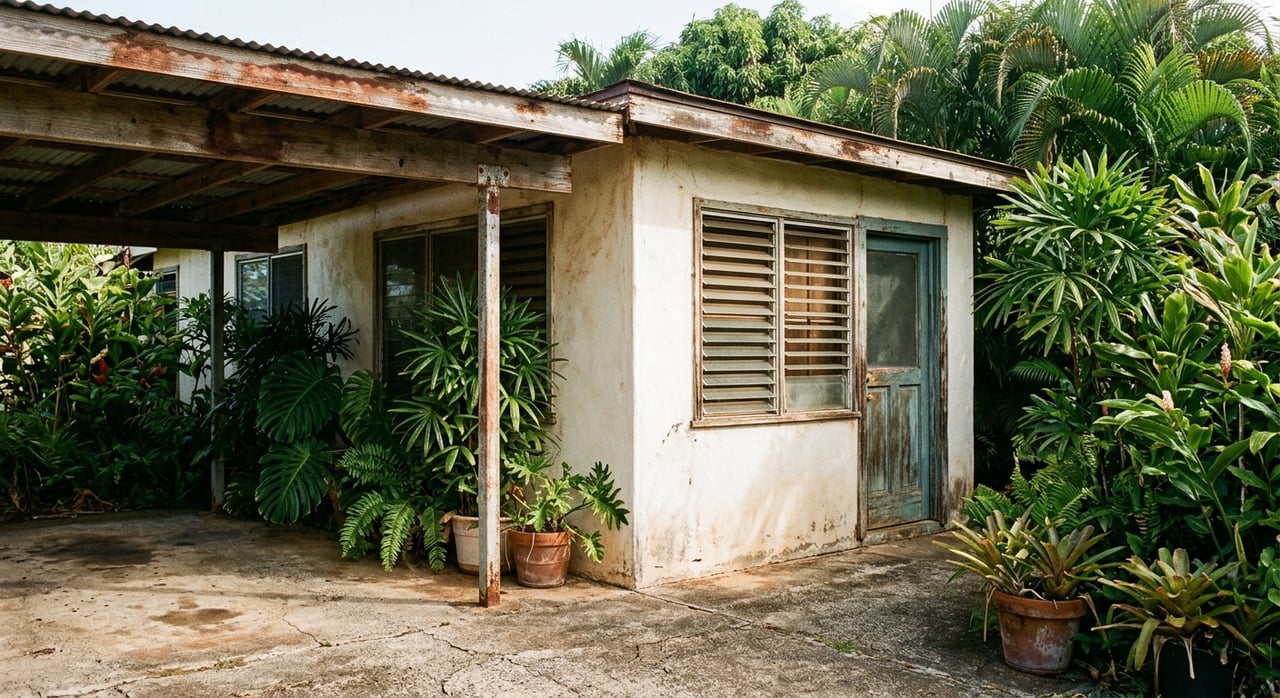
Buying a fixer-upper in Kekaha can sound like a smart way to get into the Kauai market, but not every “project home” is a good opportunity. In this part of West Kauai, older housing, coastal conditions, permitting rules, and site-specific hazards can turn a simple remodel into a much bigger undertaking. If you are weighing whether a Kekaha fixer is worth it, the key is knowing what to look past, what to inspect first, and where the real risks usually hide. Let’s dive in.
Why Kekaha draws fixer-upper buyers
Kekaha often stands out for buyers looking for relative value on Kauai. Census Reporter data for Kekaha shows a median value of owner-occupied housing units of $682,900, which is below Kauai County’s $873,200 median, even though it is still high compared with the U.S. overall.
That gap helps explain why buyers may look here for renovation opportunities. If you are open to work, a fixer-upper can look like a path to more space, a better lot, or a better long-term fit than a move-in-ready home at a higher price.
Kekaha also has a distinct housing story. The West Kauai Regional Plan describes Kekaha as one of the region’s plantation towns and notes its historic connection to the mill, which matters because older homes often come with age-related condition issues that are not obvious during a quick showing.
Why fixer-uppers here are different
In Kekaha, the challenge is usually not just outdated cabinets or old flooring. Many homes need close review of the roof, structure, windows, doors, pests, drainage, and utility systems before you even think about finishes.
That is especially true on Kauai’s West Side, where wind exposure, salt air, and older construction can affect how a property has aged. A home that looks manageable on the surface may still need a much deeper review once inspections begin.
There is also a location factor that buyers should not ignore. In April 2025, the county announced soil sampling at the former Kekaha Sugar Mill property under a Brownfields Assessment Grant, which is a reminder that some properties near the old industrial core may call for added environmental diligence.
What a Kekaha fixer often needs
Roof and wind upgrades
On Kauai, roof condition is a big deal. The University of Hawaii Sea Grant homeowner handbook explains that Hurricane Iniki damaged or destroyed more than 6,000 Kauai homes and identifies roof blow-off as a major failure point.
That same handbook notes that reroofing can be a good time to strengthen the roof system. In salt-spray areas, it says stainless-steel clips and fasteners are preferred, so if a Kekaha home needs a new roof, the conversation should include resilience, not just appearance.
Termites and hidden deterioration
A fresh coat of paint does not tell you much about what is happening inside walls, crawlspaces, or framing. The UH termite project states that the Formosan subterranean termite is the single most damaging insect pest to homes and other structures in Hawaii and notes that severe damage can occur in as little as two years in poorly planned or constructed homes.
The Sea Grant handbook also says a house in good condition should be free from termite damage, wood rot, and fastener corrosion. That makes pest and deterioration checks essential in Kekaha, especially for older homes with deferred maintenance.
Windows, doors, and the exterior envelope
Strong winds do not just threaten roofs. The Sea Grant handbook also notes that winds can damage doors and windows, with greater risk in homes that are poorly constructed or already weakened.
For that reason, a Kekaha fixer should be evaluated as a full exterior-envelope project when needed. New interior finishes may look nice, but they should not come before checking whether the house can keep out weather where it matters most.
Systems before style
A true fixer-upper is usually a systems project first. HUD home shopping guidance points buyers toward electrical, plumbing, waste disposal, water and sewage, heating and cooling, insulation, ventilation, pests, foundation, and roof conditions during the inspection process.
That is a useful mindset in Kekaha. If the home needs major work in those categories, your budget and timeline can shift quickly, even if the cosmetic updates seem straightforward.
Permits can shape your timeline
In Kauai, permit work is not always simple, and that matters when you are budgeting for a fixer. According to the county’s building permit information page, a building permit application starts a process that may involve zoning, planning, water, engineering, wastewater, fire, and building review.
For a typical single-family residential structure, the county says building permit requirements plus a zoning permit application are generally enough. Still, more intensive work may require a public hearing and Planning Commission approval, which can affect project timing and feasibility.
The county also says the Department of Water should be contacted first so applicants can submit a water clearance form before starting the permit process. If you are considering a home that needs substantial repairs or additions, early permit research matters as much as your contractor estimates.
Site work matters more than many buyers expect
A fixer-upper is not always just a house problem. Sometimes it is a site problem too.
The county’s minimum building permit requirements checklist flags Special Management Area rules, shoreline setback variance rules, flood ordinances, and grading permit requirements for substantial excavation, fill, or drainage changes. If a property needs foundation-related work, site drainage corrections, or major yard regrading, those details can affect both cost and approvals.
This is one reason the cheapest property is not always the best project. If the work reaches beyond the walls of the home, the scope can become much more complex.
Hazard review should be part of the decision
Kekaha buyers should also understand local hazard context before closing. The county’s disaster preparedness manual places the area in Evacuation Zone #1 Waimea-Kekaha, and Hawaii Emergency Management Agency guidance says people in a tsunami evacuation zone should move to higher ground when warned or if they feel shaking near the ocean.
Flood review matters too, but it should not stop at a map check. The research report notes that the DLNR Flood Hazard Assessment Tool is based on FEMA flood maps and explicitly says it does not identify all flood-prone areas, so parcel-specific review is still important.
For some homes, this may simply confirm manageable risk. For others, it may change how you think about insurance, future improvements, or whether the property fits your comfort level at all.
How to know if the project fits you
Not every fixer-upper is right for every buyer. The better question is not “Can this home be improved?” but “Does this scope match your time, budget, and tolerance for complexity?”
HUD says a home inspection is designed to uncover hidden defects and focuses on structure and mechanical systems. It also makes an important point: an inspection tells you about condition, not whether the home is a good value for the money.
That is where planning comes in. In a place like Kekaha, the more your project touches roof structure, pests, drainage, utilities, flood or shoreline review, or possible environmental concerns, the less it behaves like a cosmetic remodel and the more it becomes a high-stakes rehab.
Smart steps before you buy
If you are seriously considering a Kekaha fixer-upper, keep your process practical:
- Start with a whole-house inspection focused on structure and systems
- Ask direct questions about roof age, termite history, drainage, and prior repairs
- Review whether the scope may trigger zoning, water, engineering, or other county review
- Look closely at site conditions, not just interior finishes
- Get multiple written contractor estimates before assuming the deal works
The FTC’s guidance on hiring a contractor recommends getting multiple written estimates, checking license and insurance, and making sure the scope, materials, completion date, and price are clearly spelled out. In a fixer-upper with overlapping issues, that paper trail can help you decide whether the project is still realistic.
When a Kekaha fixer makes sense
A fixer-upper in Kekaha can be a smart move if the home offers clear upside and the problems are understandable, inspectable, and permit-able. In many cases, the best opportunities are not the homes with the lowest list price. They are the ones where you can identify the true scope early and move forward with clear eyes.
This is where local property knowledge really helps. Older West Side homes often require a more grounded, practical approach than buyers expect, and having someone who understands both condition issues and the local process can save you time, money, and frustration.
If you want help evaluating whether a Kekaha fixer-upper fits your goals, connect with Kelly Liberatore. You will get calm, practical guidance rooted in West Kauai experience so you can make a smart move with confidence.
FAQs
What makes a fixer-upper in Kekaha different from a fixer-upper in other parts of Kauai?
- Kekaha homes often require closer review of older construction, wind exposure, salt-air wear, termite risk, and site-specific hazard or permit issues before cosmetic updates are considered.
What should you inspect first in a Kekaha fixer-upper?
- Focus first on the roof, structure, termites, wood rot, windows, doors, plumbing, electrical, drainage, and other major systems that can drive cost and scope.
Do Kekaha renovation projects usually need permits?
- Many do, and the county says permit review may involve zoning, water, engineering, wastewater, fire, planning, and building divisions depending on the scope of work.
Should you worry about flood or tsunami risk when buying a Kekaha home?
- You should review both carefully because Kekaha is in the Waimea-Kekaha evacuation zone, and flood map tools do not identify every flood-prone area.
Is the cheapest fixer-upper in Kekaha usually the best deal?
- Not necessarily, because lower-priced homes can hide expensive roof, pest, drainage, structural, or permitting issues that make the total project much more costly.