If you are drawn to Kalaheo for its cooler air, hillside views, and laid-back South Kauai setting, you are not alone. Buying on the hill can be a great fit, but it also comes with property-specific questions that matter more here than they might on a flatter lot. This guide will help you look past the view and focus on the details that shape daily life, upkeep, and long-term confidence in a Kalaheo purchase. Let’s dive in.
Why Kalaheo Hillside Living Stands Out
Kalaheo is one of the five towns in South Kauai, and its commercial core is centered along Kaumualii Highway. The county’s South Kauai Community Plan describes the area as more local-serving than resort-focused, with everyday businesses that primarily serve residents. For many buyers, that gives Kalaheo a practical, lived-in feel that is different from more visitor-oriented parts of South Kauai.
Hillside living in Kalaheo also comes with a distinct daily rhythm. The county notes that sidewalks and bicycle facilities are disconnected from the neighborhoods, and crossings along the highway can be difficult. In simple terms, many routines here are car-first, even when services are nearby.
What Hillside Topography Means
South Kauai slopes from Kapalaoa Summit toward the coast, with more than 3,000 feet of elevation change over roughly eight miles. That elevation shift is part of what makes hillside homes feel so appealing, but it also affects drainage, site design, and maintenance.
The county also notes that much of the district is highly erodible or potentially highly erodible. On a Kalaheo hillside parcel, that can make runoff control, grading, and slope stability more important than buyers expect at first glance. A beautiful setting is still a working landscape, and the lot itself deserves close attention.
Climate Can Change by Elevation
One of the biggest lifestyle advantages of Kalaheo hillside living is the microclimate. The National Weather Service notes that in Hawaii, temperature drops by about 3 degrees for every 1,000 feet of elevation. That means a home up the hill can feel noticeably cooler than lower-lying areas, especially in the evening.
NOAA’s climate summary for nearby Lihue also helps frame the bigger picture. Trade winds provide natural ventilation through most of the year, and rainfall tends to increase toward the mountains to the west. For you as a buyer, that means a Kalaheo hillside property may offer cooler breezes and comfortable airflow, but it can also bring more exposure to rain, sun, and drainage concerns depending on the exact lot.
Daily Life Often Revolves Around Highway Access
Kaumualii Highway, also known as Route 50, is the main arterial through South Kauai. The county describes it as a two-lane state highway through most of the district, and one of the planning area’s two traffic signals is at Papalina Road near the Kalaheo Neighborhood Center.
That may sound like a small detail, but it matters in daily life. When you live on a hillside in Kalaheo, your routine often depends on how easily you can enter and exit the highway, how comfortable the drive is at night or in rain, and how parking works once you get home.
What to Check on the Driveway
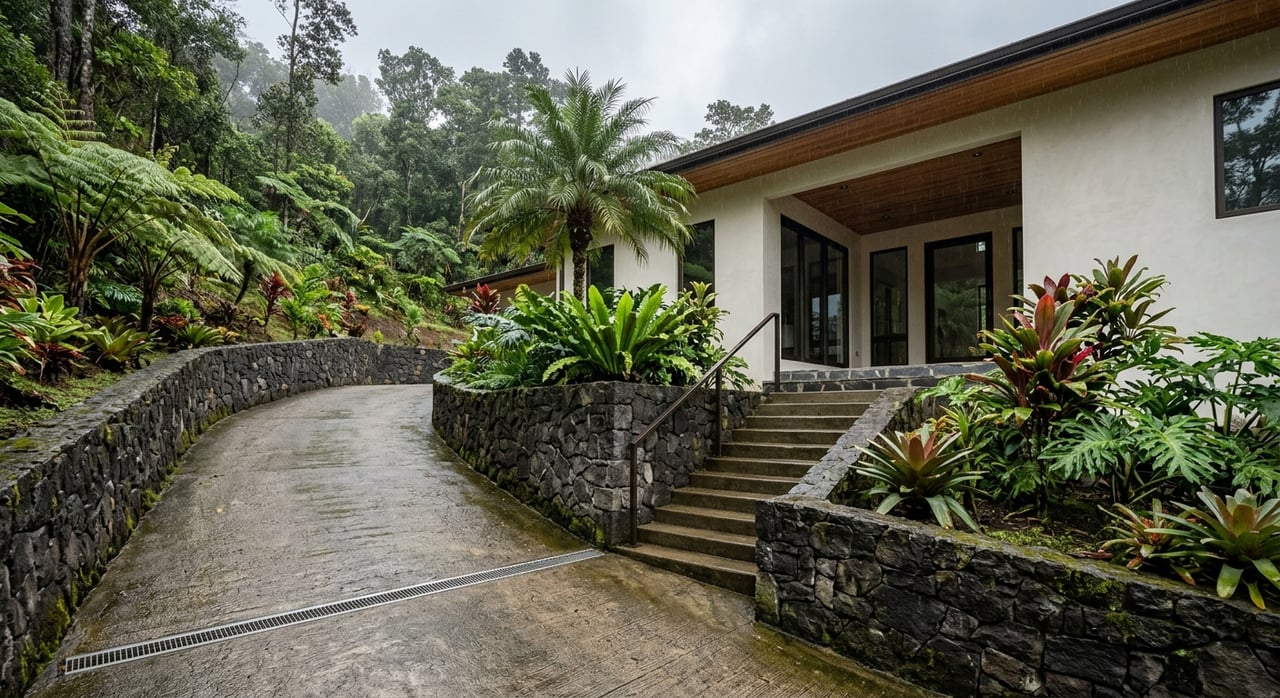
On a hillside property, the driveway is not just a way to get to the house. It is part of how the home functions every single day. A steep or narrow approach may feel manageable during a quick showing, but very different in bad weather, after dark, or when guests visit.
As you tour properties, pay attention to a few practical points:
- Whether the driveway grade feels comfortable in normal daily use
- Whether two cars can pass, turn around, or park without stress
- Whether visibility is clear when entering or leaving
- Whether the surface appears to shed water well after rain
These are small quality-of-life details, but they can strongly affect how easy a home feels to live in.
Water and Wastewater Need Parcel-Level Review
Kalaheo is served by the Kalaheo-Koloa water system, which the Kauai Department of Water says is supplied by deep wells and local storage tanks. That is helpful because it confirms public water service in the area, but buyers should still ask about the property’s actual water pressure, service history, and any irrigation or conservation considerations tied to the parcel.
Wastewater is even more important to verify. The South Kauai Community Plan states that South Kauai is not serviced by the county wastewater system across the district as a whole, and county guidance says sewer service is area-specific. For a buyer, the real question is simple: what wastewater system serves this exact property?
Drainage Matters More Than Many Buyers Expect
Even on homesites that feel elevated, drainage should be a major part of your review. Hillside lots can channel water in ways that are not obvious on a sunny day. Downspouts, gutters, swales, retaining systems, and slope landscaping all play a role in how the parcel handles rain.
Because much of the district includes rocky and erodible soils, visible erosion control is worth a close look. If water does not move away from the house and slope properly, maintenance can become more demanding over time.
Landslide and Slope Risk Deserve Careful Attention
Kauai County’s 2026 Multi-Hazard Mitigation and Resilience Plan identifies landslide susceptibility in parts of the Koloa-Poipu-Kalaheo area. Specifically, 2.24 of 7.5 major road miles in that area fall within high, higher, or highest landslide susceptibility, with another 0.8 miles in moderate susceptibility.
That does not mean every hillside home is problematic. It does mean you should take slope conditions seriously and review them carefully during due diligence. In Kalaheo, that often includes looking closely at cut-and-fill work, retaining walls, drainage paths, and any signs of past ground movement.
Retaining Walls and Site Work Are Worth a Closer Look
A retaining wall can be a normal part of hillside design, but it should never be treated as a background feature. During your showing and inspections, note whether walls appear plumb, whether there are cracks or bowing, and whether water appears to be collecting nearby.
It is also smart to ask about any access agreements, easements, or maintenance responsibilities that affect site improvements. On hillside parcels, these items can influence parking, repairs, and future upkeep in ways that are easy to miss if you only focus on the home itself.
Flood Review Still Applies on the Hill
Some buyers assume flood concerns disappear once a property is above the coast. In practice, flood review can still matter, especially if the parcel is near a stream, drainageway, or mapped flood area. Kauai County’s flood review guidance points buyers and builders to local flood hazard review tools and county certifications for several mapped flood zones.
The takeaway is straightforward. Even if a property feels elevated, you should still confirm whether any floodplain review, documentation, or elevation information applies to that exact TMK.
Views Come With Tradeoffs
One of the biggest reasons buyers love Kalaheo hillside homes is the view potential. Depending on the lot, you may get wide sky, mountain, ocean, or valley outlooks that feel special the moment you arrive.
Still, view-oriented lots can bring more exposure to wind, sun, and weather. They may also require more upkeep for landscaping, drainage, and exterior materials. When you tour a home, it helps to ask not only whether the view is beautiful, but also what it takes to maintain comfort and protect the property over time.
Questions to Ask Before You Make an Offer
If you are seriously considering a Kalaheo hillside property, these are smart questions to ask early:
- What are the lot’s elevation, slope, and drainage patterns?
- How does the driveway function in rain, at night, and for everyday parking?
- Are there retaining walls, easements, or access agreements that affect maintenance?
- Is the property on county water, and what wastewater system serves it?
- Are there any floodplain, erosion, or landslide concerns tied to the TMK?
- How much does comfort depend on breezes, shade, and cross-ventilation?
- Could vegetation or nearby future construction affect the current view corridor?
These questions help you move from a general impression to a more confident decision.
Why Local Guidance Helps in Kalaheo
Kalaheo hillside properties can be wonderful, but they are rarely one-size-fits-all. Two homes that seem similar online can live very differently once you factor in slope, access, drainage, wind exposure, and utility setup.
That is where practical local guidance matters. A calm, detailed review can help you separate cosmetic appeal from the real factors that shape ownership, maintenance, and day-to-day ease.
If you are considering a hillside home in Kalaheo and want practical insight on location, access, and property condition, connect with Kelly Liberatore for thoughtful guidance rooted in South Kauai experience.
FAQs
What makes Kalaheo hillside living different from flatter areas on Kauai?
- Kalaheo hillside living often means cooler breezes, more elevation change, car-first routines, and more property-specific review of drainage, slope, and access.
What should buyers inspect first on a Kalaheo hillside property?
- Start with driveway usability, retaining walls, drainage patterns, erosion control, and the property’s water and wastewater setup.
Does a Kalaheo hillside home have flood risk?
- It can, depending on the exact parcel, especially near streams, drainageways, or mapped flood areas, so parcel-level flood review is still important.
Are Kalaheo homes on public water?
- Kalaheo is part of the Kalaheo-Koloa public water system, but buyers should still confirm service details and ask property-specific questions.
How does elevation affect comfort in Kalaheo?
- Higher elevation can bring cooler temperatures and stronger breezes, which may improve airflow and comfort but also affect rain exposure and maintenance needs.
Why is wastewater verification important in Kalaheo?
- Because wastewater service in South Kauai is area-specific, you need to confirm what system serves the exact property rather than assume it based on location alone.