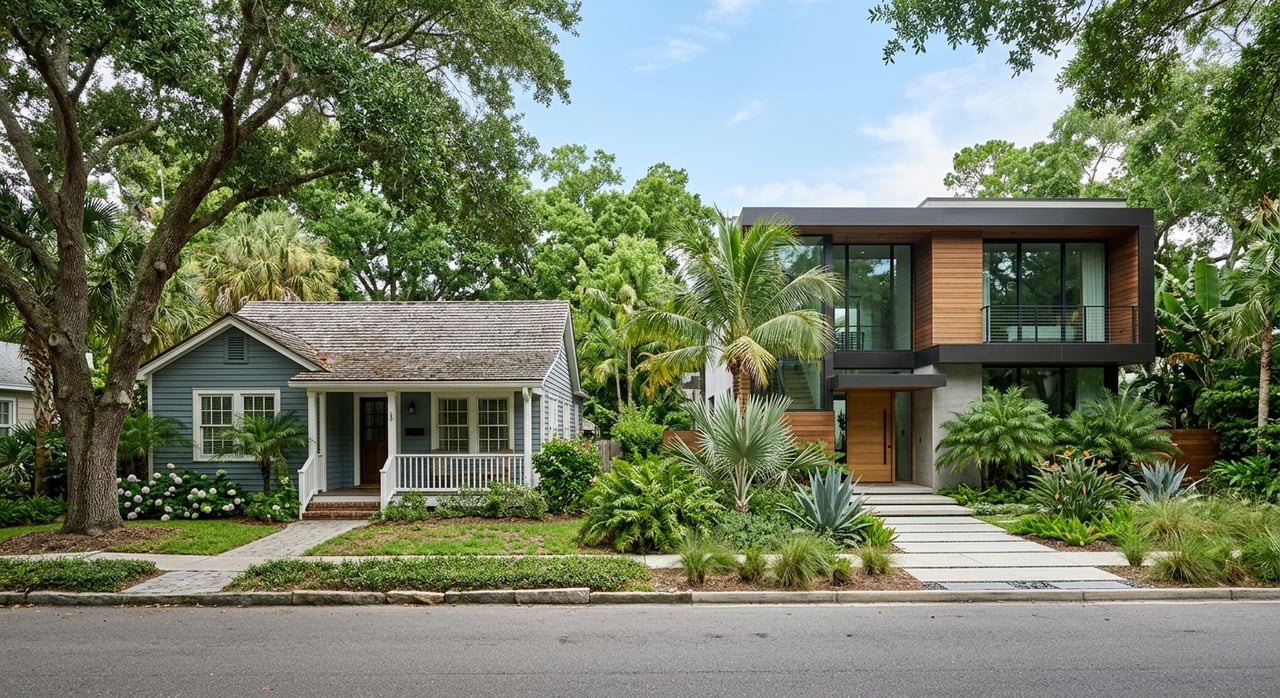
Trying to choose between an older neighborhood and a newer one in Koloa? That question comes up often because the answer is rarely just about the age of the home. In Koloa, the real difference usually comes down to character, rules, daily convenience, and how you want your home experience to feel. If you are weighing your options in this part of Kauai, this guide will help you compare the tradeoffs with more clarity. Let’s dive in.
Why Koloa Feels Different
Koloa has a distinct identity shaped by both history and planning. County planning describes the historic town core as a compact, pedestrian-oriented main street with covered-porch commercial buildings, walkways, monkeypod canopy, and a two-story height maximum in the Historic Koloa Town Core Special Treatment-Cultural/Historic District.
That matters to you as a buyer because neighborhood feel in Koloa is not accidental. The South Kauai Community Plan says the area’s form-based code was calibrated from existing built form to preserve compact, connected, walkable places. In plain terms, Koloa has an intentional sense of place, and that influences both older and newer neighborhoods.
Older Koloa Neighborhoods
Older parts of Koloa often appeal to buyers who want texture, history, and a more organic street feel. You may notice homes and streetscapes that reflect the town’s plantation-era roots and long-standing residential patterns.
Historic residential examples in Koloa show features such as post-and-pier foundations, single-wall construction, exposed rafter tails, lava-rock porch details, built-ins, and lanai-oriented layouts. These details help explain why many older homes feel visually distinct from newer builds, even when square footage is not dramatically different.
What older areas often offer
Older neighborhoods in Koloa generally stand out for their street character and established setting. The biggest draw is often the feeling of a lived-in town rather than a newly created community.
You may find benefits like:
- More historic texture and architectural personality
- A stronger connection to Koloa’s original town fabric
- A more organic layout rather than a highly controlled plan
- Walkable access in or near established town areas, depending on location
What to look at carefully
Older does not always mean simpler. Homes with historic or older construction styles can come with maintenance needs, renovation questions, or design limitations that deserve close review.
If you are considering an older home, pay close attention to condition, improvements over time, and how the property fits current planning or zoning realities. This is where practical property insight matters, especially if you are comparing charm against future upkeep.
Newer Koloa Neighborhoods
Newer neighborhoods in and around Koloa often appeal to buyers who want a more structured ownership experience. These areas may still reflect local design influences, but they usually come with clearer community standards.
A good example is Koloa Creekside, where listing materials have shown plantation-style architecture, earth-tone color guidance, a 20-foot roof-height cap, and a coverage cap for individual homesites. That gives you a sense of how newer development can echo historic cues while operating within a more defined rule set.
What newer areas often offer
Newer neighborhoods are often easier to understand from a planning standpoint because expectations are more clearly spelled out. If you like predictability, this can be a real advantage.
You may find benefits like:
- More formal design guidelines
- Clearer review standards for exterior changes
- More defined amenity packages in some communities
- A more consistent neighborhood appearance
Master-planned living in Koloa
Kukuiʻula is the clearest example of a larger master-planned community in the Koloa area. The developer describes it as a 1,010-acre private club community with nine distinct neighborhoods and homes that range from custom ocean-view residences to villas, cottages, and bungalows in a modern plantation style.
It also shows how newer communities can involve more oversight. Materials for Kukuiʻula note that showings require advance arrangement, unaccompanied guests are not permitted, and there are open-house, photography, and signage protocols. Its design guidelines also emphasize color, texture, shade, lanais, and compatibility with the broader neighborhood character.
Old vs New Is Not About Lot Size Alone
Many buyers assume older neighborhoods have larger lots and newer neighborhoods have smaller ones. In Koloa, the data do not support a simple rule like that.
Current listing examples show a Koloa Estates lot at about 0.66 acre and a Koloa Creekside homesite at 26,454 square feet, or about 0.61 acre. That means some newer Koloa-area neighborhoods are not necessarily smaller. The more meaningful difference is often how much the parcel is shaped by design review, planning standards, or community rules.
Amenities Can Shape Your Decision
In Koloa, daily convenience is a major part of the buying decision. County materials identify the Koloa Neighborhood Center on Weliweli Road and note area amenities such as groceries, the post office, Poipu Shopping Village, Kiahuna Golf Club, medical clinics, and beaches including Poipu Beach Park and Shipwrecks Beach.
County materials also reference core waypoints such as Koloa Elementary School, the Koloa Post Office, and the Koloa Neighborhood Center. For you, this means the choice between older and newer neighborhoods should include a practical question: how do you want your daily routine to work?
Questions to ask yourself
When comparing areas, think beyond the home itself. Ask:
- Do you want to be closer to Koloa’s established town setting?
- Do you prefer a neighborhood with more formal standards?
- How important is walkability to shops, services, or parks?
- Are you comfortable with community review processes or private-club protocols?
- Do you want a property that may invite renovation or customization?
A Simple Buyer Framework
The most useful way to compare older and newer Koloa neighborhoods is by control and convenience, not just age. That framework tends to be more accurate and more helpful during your search.
Here is a simple way to think about it:
| Factor | Older Koloa Areas | Newer Koloa Areas |
|---|---|---|
| Neighborhood feel | More organic and historic | More planned and consistent |
| Architecture | Often varied with older local details | Often guided by design standards |
| Rules and oversight | May be less uniform by block or parcel | Often more formal and predictable |
| Amenities and access | Can connect well to town fabric | May offer clearer amenity structure |
| Buyer fit | Great for character seekers | Great for buyers who want predictability |
Neither side is automatically better. The best fit depends on whether you value authenticity and flexibility more, or consistency and structure more.
What to Verify Before You Buy
No matter which direction you lean, the next step is due diligence. Before writing about or buying any specific parcel, the county says you should verify exact zoning, flood exposure, CPR or HOA documents, design guidelines, and any membership or rental restrictions.
The county also notes that GIS and zoning maps are informational only, and final confirmation must come from the Planning Department. That is especially important in Koloa, where neighborhood character, planning standards, and community rules can all affect how you use a property.
Your due diligence checklist
Before moving forward on a property, make sure you review:
- Exact zoning and permitted use
- Flood exposure details
- CPR documents, if applicable
- HOA documents and fees, if applicable
- Design guidelines or review requirements
- Club or membership obligations, if applicable
- Rental restrictions or other ownership limitations
How to Choose the Right Fit for You
If you love a strong sense of town history, architectural quirks, and a more established streetscape, an older Koloa neighborhood may be the better match. If you prefer more predictable standards, a polished community presentation, and clearly defined expectations, a newer neighborhood may feel easier to navigate.
In either case, it helps to look past marketing language and focus on how the property will function in your day-to-day life. The right choice is usually the one that aligns with your lifestyle, your comfort with rules or upkeep, and your long-term plans for the home.
Koloa gives you both ends of that spectrum, which is part of what makes this market so interesting. If you want help comparing specific neighborhoods, reviewing property tradeoffs, or narrowing your search in South Kauai, Kelly Liberatore can help you sort through the details with practical local guidance.
FAQs
What is the main difference between older and newer neighborhoods in Koloa?
- The biggest difference is usually not lot size or age alone. It is often the balance between historic character and a more organic feel versus clearer design rules, oversight, and amenity structure.
Are newer neighborhoods in Koloa always on smaller lots?
- No. Current listing examples in the Koloa area show that some newer homesites can be similar in size to lots in established neighborhoods.
What defines the historic feel of older Koloa homes?
- Historic examples in Koloa show traits like post-and-pier foundations, single-wall construction, exposed rafter tails, lava-rock porch details, built-ins, and lanai-oriented layouts.
What should buyers know about newer master-planned communities near Koloa?
- Newer master-planned communities can offer a more structured environment with design guidelines, access protocols, and other community rules that shape the ownership experience.
What amenities are important when comparing neighborhoods in Koloa?
- Many buyers focus on access to groceries, the post office, shopping, medical clinics, parks, golf, and nearby beaches, along with how close they want to be to Koloa’s established town setting.
What should buyers verify before purchasing a Koloa property?
- Buyers should verify zoning, flood exposure, CPR or HOA documents, design guidelines, and any membership or rental restrictions, with final confirmation from the Planning Department.