If you own a plantation-style home in Waimea, you already know it is not just another house on the market. Buyers notice the charm, the lanai, the old-growth details, and the sense of place right away. They also tend to ask sharper questions about condition, permits, flood risk, wastewater, and whether the home is officially historic. This is where smart preparation pays off, so let’s dive in.
Why Waimea plantation homes need a different selling strategy
Waimea sits in the West Kauaʻi planning area, where county policy emphasizes preserving the historic form and character of rural towns. That matters because buyers are often drawn to homes that still reflect Waimea’s cottage-scale and plantation-era visual character.
At the same time, older homes in this area can raise more due diligence issues than newer properties. Depending on the property, questions may come up around preservation review, flood exposure, past alterations, and aging systems. A strong sale strategy needs to account for both the home’s appeal and the extra scrutiny it may receive.
Understand what “historic” really means
Not every older plantation-style house is officially historic. In Hawaiʻi, the formal designation comes through the Hawaiʻi Register of Historic Places, and properties over 50 years old may be nominated if they still retain historic integrity.
That distinction matters when you market the property. You can describe a home as older or plantation-style if that is accurate, but you should avoid implying official historic status unless it is verified. If a private property is listed on the Hawaiʻi Register, it may qualify for county property-tax benefits and grant funding, and alterations are subject to State Historic Preservation Division review under Hawaiʻi law.
Even if a home is not formally listed, preservation questions can still come up. Kauaʻi’s Historic Preservation Review Commission reviews archaeological and building-design issues for historic resources and in-fill development, which means older homes can draw added attention during planning or improvement work.
Focus pre-list repairs where buyers look first
When you prepare a plantation-style home for sale, cosmetic updates should not lead the list. Historic Hawaiʻi Foundation’s maintenance guidance, published with support from Kauaʻi planning and preservation staff, recommends tackling life-safety issues first, then weatherproofing, then structural repairs, and finally finishes.
For most Waimea sellers, that means your best pre-list budget often goes toward moisture control, roof issues, and visible system concerns before decorative changes. This approach protects the home’s character and helps reduce buyer objections once inspections begin.
Prioritize roof and gutter maintenance
A buyer may love the home’s look, but signs of roof neglect can quickly change the tone of a showing. Guidance for vintage homes recommends cleaning gutters regularly, sealing flashing, repairing leaks, and matching the historic roof pitch, slope, and detailing if reroofing is needed.
This is one of the clearest places where maintenance and presentation overlap. Clean rooflines and functioning gutters signal care, while staining or visible drainage problems can raise concern about deeper issues.
Address moisture under the house
Many plantation houses have under-house ventilation concerns, and moisture is a serious issue in older wood homes. Local preservation guidance warns that wet wood can lead to dry rot and termites and recommends keeping the area under the house dry.
Before listing, it helps to make sure the under-house area is as clean, dry, and open as possible. Buyers may not crawl under the home during a first showing, but inspectors will, and moisture problems often become a pricing conversation later.
Repair siding instead of replacing character
Many plantation-style homes on Kauaʻi were built with single-wall construction and board-and-batten or tongue-and-groove siding. Preservation guidance recommends repairing damaged siding rather than replacing it when possible.
Original doors and windows also matter. The same guidance advises retaining them and avoiding vinyl, aluminum, or plastic overlays that can trap moisture and change the home’s appearance.
Handle paint carefully
Fresh paint can help a home show well, but older homes require more caution. Exterior paint should be maintained, and if paint is flaking, it should be tested for lead before scraping or repair begins.
That is especially important because homes built before 1978 are likely to contain lead-based paint and are generally covered by federal lead disclosure requirements. If your home falls in that age range, buyers will often expect clear, organized information.
Check lanais, porches, and landscaping
The lanai is often one of the most appealing parts of a plantation-style home. Preservation guidance says lanais and porches should not be enclosed as added interior space, which is helpful context if buyers ask about past changes or future possibilities.
Landscaping also plays a bigger role than many sellers expect. Vegetation should be kept at least two feet away from the building, and trees should be far enough away that roots and branches do not affect the foundation, roof, or siding.
Don’t overlook electrical and plumbing
Electrical and plumbing repairs rank high because they affect life safety and moisture control. If you know of unresolved issues in either system, addressing them before listing can reduce renegotiation later.
For an older Waimea home, practical fixes often create more value than flashy upgrades. Buyers tend to respond well when they can see that the home has been responsibly maintained.
Get ahead of permits and property records
One of the best ways to reduce surprises is to review permit history early. Kauaʻi’s building-permit process can involve a building application, contractor statement, zoning review, and, for more intensive work, additional planning review.
This matters because older homes sometimes have a long history of additions, alterations, or system changes. If buyers cannot clearly understand what was done and whether it was properly permitted, they may ask for credits, longer contingencies, or a lower price.
Watch for flood-zone issues
Flood risk is one of the biggest questions for Waimea properties. Kauaʻi’s multi-hazard plan notes that homes near the Waimea River are protected by a flood-control levee that has been decertified by FEMA, and it also records the severe impacts of the 1949 flood across Waimea.
If your parcel is in a flood-prone area, improvement work may trigger elevation, floodproofing, or engineering requirements depending on the zone. County engineering review may also require a professional flood study or no-rise certification in certain cases. Even if you are simply selling, buyers may ask for flood-zone documentation and insurance context early in the process.
Be ready for wastewater questions
Wastewater is another common issue in older-home transactions on Kauaʻi. The county permit guide says that if public sewer is available, the property must connect and abandon any existing individual wastewater system.
The Hawaiʻi Department of Health also says that selling a house does not currently require a cesspool upgrade. However, state law requires replacement of all cesspools by 2050, and upgrades can be triggered by certain pump-out patterns, spills, change of use, or specific building modifications. Because Kauaʻi has a large number of cesspools, buyers often ask about this right away.
Prepare for the disclosures buyers will expect
Hawaiʻi’s seller disclosure law requires clear disclosure of material facts known to the seller. If a material fact changes before recording, the seller must issue an amended disclosure, and the buyer may have 15 days to review and rescind before recording.
For a plantation-style home in Waimea, disclosure questions often go beyond the basics. The more organized and factual you are upfront, the smoother the sale usually becomes.
Common disclosure topics for older Waimea homes
Here are the issues buyers commonly raise:
- Lead-based paint for homes built before 1978
- Termites or dry rot, especially where moisture has been present
- Flood risk and flood-zone conditions
- Wastewater systems, including cesspool or septic status
- Permit history for additions, enclosed spaces, bathrooms, or carports
- Recorded restrictions such as covenants or declarations tied to the land
- Burial or archaeological concerns if any are known
If the property has known burial or archaeological issues, that should be treated as a separate and serious risk category. The State Historic Preservation Division says burial-site disturbance must be reported and can carry severe penalties, and Hawaiʻi seller disclosure law also addresses failure to disclose or record a burial or archaeological site.
Market the home for authenticity, not over-restoration
The strongest marketing for a Waimea plantation-style home usually highlights authenticity and care. Buyers often respond best when a home looks well maintained, true to its era, and ready for its next owner.
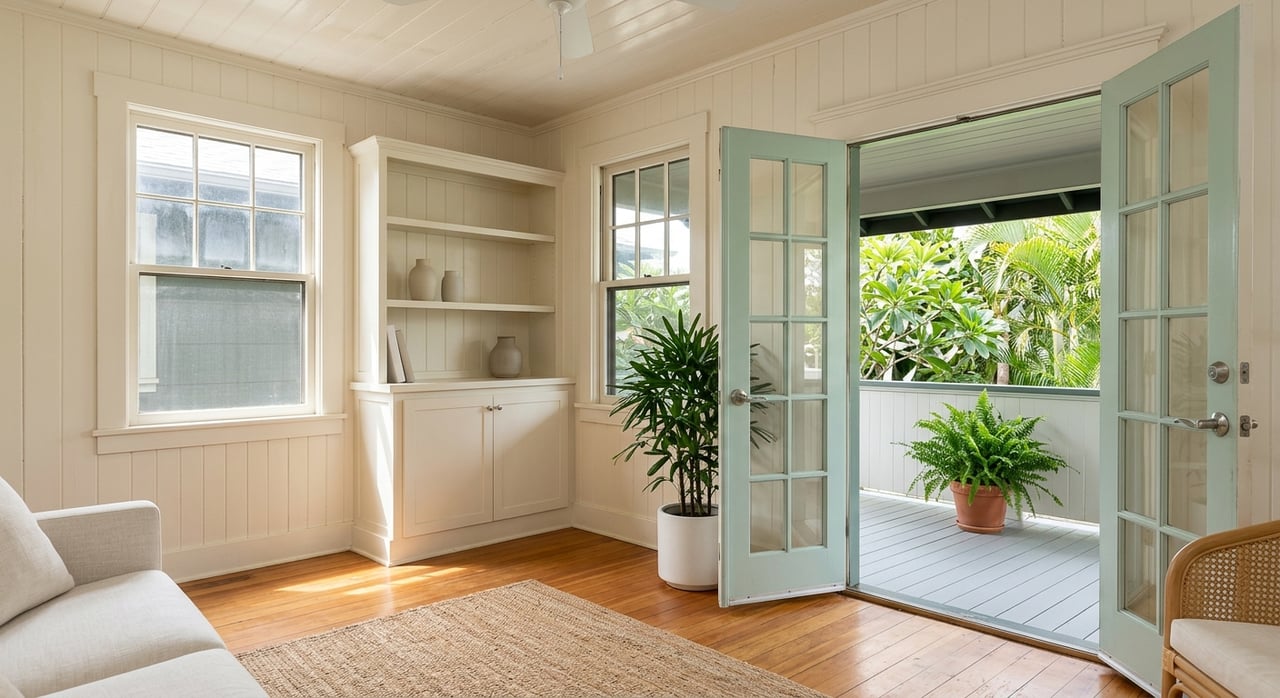
That means the photo story should focus on the details that define the home. Think intact doors and windows, board-and-batten or tongue-and-groove siding, the lanai or porch, clean rooflines, and mature landscaping.
What to clean up before photography
Before photos and showings, focus on the details the camera notices first:
- Fresh, well-maintained exterior paint
- Clean gutters and roof edges
- Trimmed vegetation with breathing room around the house
- A dry, tidy under-house area
- Clear views of the lanai, porch, and original architectural features
This type of prep supports the impression buyers want from an older home. It tells them the property has been cared for without trying to make it something it is not.
Price with condition and complexity in mind
A plantation-style home can attract strong interest, but pricing needs to reflect the full picture. Buyers will weigh the home’s charm and location against condition, system age, flood concerns, wastewater questions, and any uncertainty around permits or historic review.
This is where practical property insight matters. A thoughtful pricing strategy does more than chase attention. It helps you attract the right buyers, support your value with facts, and avoid losing momentum once inspections and disclosures are underway.
Why local coordination matters in Waimea
Selling an older home in Waimea is rarely just about putting it on the MLS. It often requires coordination around permit history, system documentation, flood questions, preservation context, and smart listing presentation.
That is why local experience matters so much on the West Side. You want a calm, practical plan that respects the home’s character, answers buyer concerns early, and presents the property with clarity and confidence.
If you are thinking about selling a plantation-style home in Waimea, working with a team that understands older island homes, listing presentation, and West Kauaʻi property questions can make the process much smoother. To start with a thoughtful pricing and prep strategy, connect with Kelly Liberatore.
FAQs
What makes selling a plantation-style home in Waimea different from selling a newer home?
- Buyers often look more closely at condition, moisture, termites, permit history, flood risk, wastewater systems, and whether the home has verified historic status.
Does an older Waimea plantation-style home automatically count as a historic property?
- No. A home can be older and plantation-style without being officially listed on the Hawaiʻi Register of Historic Places.
What repairs should you prioritize before listing a historic-style home in Waimea?
- Start with life-safety items, moisture control, roof and gutter issues, structural concerns, and key electrical or plumbing repairs before cosmetic updates.
Do sellers of older homes in Waimea need to disclose lead-based paint?
- If the home was built before 1978 and you have known lead-paint information, federal disclosure rules generally apply before a contract is signed.
Why do buyers ask about cesspools when buying an older Waimea home?
- Wastewater questions are common because many older properties on Kauaʻi still have older systems, and state law requires cesspool replacement by 2050 even though a sale alone does not currently trigger an upgrade.
How should you market a plantation-style home in Waimea?
- Focus on authentic architectural features, visible maintenance, accurate property details, and clear answers to common buyer questions rather than overpromising historic designation or condition.