Imagine a buyer stepping onto your lanai, feeling the trade winds and watching the light drift across tongue‑and‑groove ceilings. That first moment sets the tone. If you are selling a plantation‑style home in Waimea, the right staging helps buyers see an authentic island lifestyle that is comfortable, practical, and respectfully rooted in place. In this guide, you will learn how to highlight classic plantation features, choose climate‑smart materials, balance historic character with modern comforts, and present your home beautifully to a wide range of Kauai buyers. Let’s dive in.
Why plantation style sells in Waimea
Plantation‑style homes are built for island life. Tall ceilings, transom or louvered windows, and raised foundations support cross‑ventilation and a cooler interior. Expansive lanais and covered walkways create effortless indoor‑outdoor living. Simple gabled rooflines and wood details give these houses an honest, timeless look.
When you stage, make these elements the stars. Keep breezeways and sightlines open, show how air flows through the home, and call attention to original flooring, ceiling planks, and trim. Buyers drawn to Waimea often want both authentic charm and daily livability. Your job is to let the home’s design speak, then frame it with thoughtful furnishings and finishes that hold up in Kauai’s climate.
Elevate curb appeal and the lanai
First impressions start at the street, then carry straight onto the lanai.
- Repair and refresh. Touch up trim, repair or replace worn siding, clean gutters and railings, and remove mildew or stains so everything looks cared for.
- Respect original details. Keep historic porch railings, shutters, and decorative trim visible. Avoid covering woodwork under heavy décor.
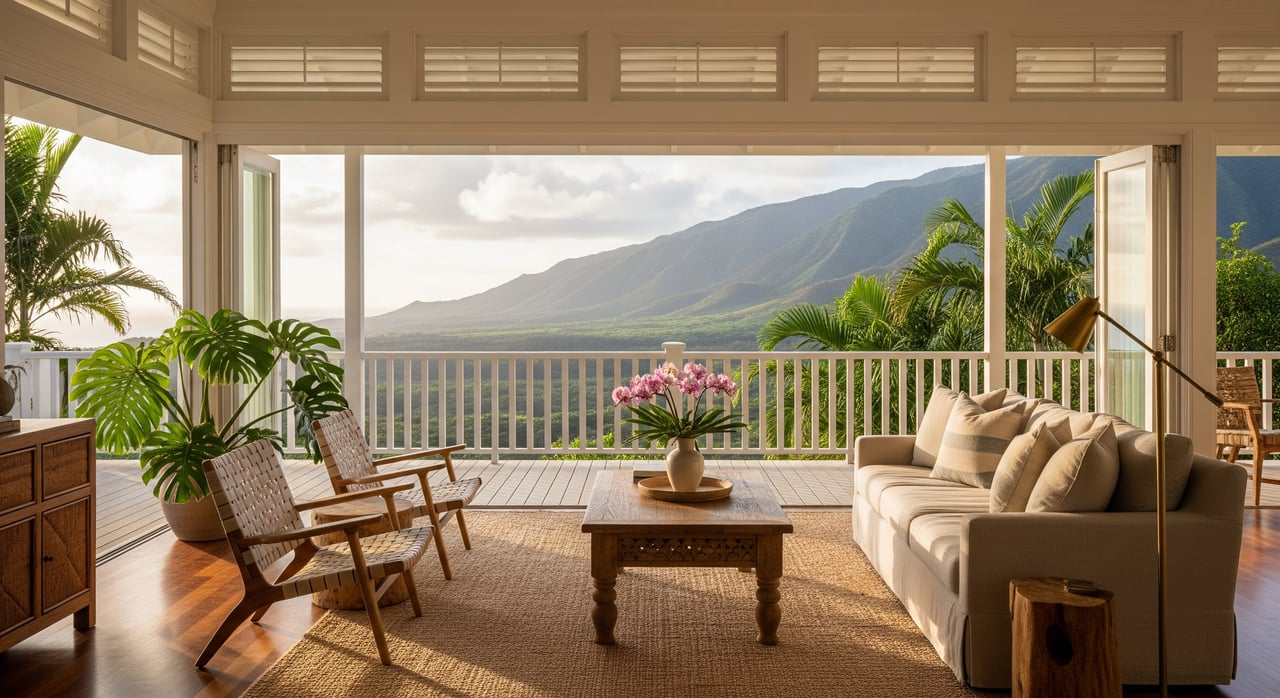
- Stage the lanai as a living room. Use weather‑resistant seating in light wood, rattan, teak, or coated metal. Add UV‑stable cushions and a simple outdoor rug. Arrange seating toward views and along natural circulation paths to interior rooms.
- Show comfort features. Make sure ceiling fans work smoothly, screens are clean and operable, and shade is obvious. These details signal low‑maintenance comfort without relying on constant air conditioning.
- Light for twilight. Subtle exterior lighting allows dusk photography and communicates that outdoor space is usable after sunset.
Stage for Kauai’s climate
Waimea tends to be windier and seasonally drier than the north and east shores, yet it still experiences warm, humid, tropical conditions with salt air exposure in coastal areas. Staging choices should prove that your home is ready for island weather.
- Choose durable materials. Use mildew‑resistant, UV‑stable fabrics. Favor teak, cane, coated metals, and light woods over heavy, dark furniture that can fade or trap heat.
- Keep moisture in check. Present dry, clean corners and spotless bath grout. Show functioning exhaust fans and, if you use a dehumidifier, place it neatly with a subtle note in showing materials.
- Lean into airflow. Open interior doors and operable louvers for showings to demonstrate cross‑breezes. Highlight ceiling fans in living areas and on lanais.
- Landscape with intention. Use low‑maintenance, climate‑appropriate plants that handle wind and salt, and prune for clear sightlines. Avoid dense plantings that block breezes or hide the house.
Arrange living spaces for flow
Your furniture plan should celebrate the path from interior to lanai and yard. That flow is the lifestyle buyers want to see.
- Open sightlines. Float sofas and chairs so you can see out to the lanai and quickly move toward it. Keep traffic paths wide.
- Keep it light and simple. Select pieces with slim profiles and light finishes that echo plantation textures. Avoid oversized sectionals that dominate small rooms.
- Use a soft, neutral base. Build a palette of warm whites, sand, greens, and muted ocean tones. Add color through locally made art or pottery rather than loud novelty prints.
- Honor original finishes. If you have hardwood floors or tongue‑and‑groove ceilings, clean and polish them. Do not cover beams or unique trim with heavy drapery or clutter.
Kitchens buyers appreciate
Buyers expect functional modern systems in a home with vintage character. Keep it honest and clean.
- Clear counters. Leave only a few practical items, like a large cutting board and a simple bowl of citrus. Consider a piece of local pottery for a subtle island note.
- Update where it counts. If appliances are modern, make them spotless. If you have vintage hardware in good condition, clean and highlight it.
- Emphasize ventilation. Ensure windows, screens, and any hood or fan work quietly, and keep them visible.
Fresh, simple bathrooms
Bathrooms in a tropical climate should look crisp and dry.
- Deep clean. Refresh caulk, brighten grout, and remove any trace of mildew.
- Keep linens neutral. Use white or light‑colored towels and shower curtains.
- Add a single natural touch. An orchid or a single leaf in a small vase keeps it elegant without clutter.
Bedrooms and small spaces
Show calm, breezy bedrooms that feel restful and practical.
- Lighten bedding. Use breathable cotton or linen, and avoid heavy duvets.
- Let the light in. Remove heavy drapes that block breezes. Choose simple shades or sheers that work with louvered windows.
- Right‑size furniture. If rooms are small, skip bulky dressers. Consider a slim desk to show a flexible sleep‑work setup.
Attic, foundation, and systems
Savvy buyers on Kauai ask about roof integrity, pests, and moisture control. Stage to answer these questions before they arise.
- Prepare documentation. Provide recent pest or termite treatments and inspections, mold remediation if applicable, and any roof, plumbing, or electrical work records.
- Tidy storage and access. Clean crawlspaces and attics so they look dry, ventilated, and cared for. Add a small mat or light where access is dark.
- Feature mechanicals. If the home has air conditioning, solar, or water catchment, keep equipment areas neat and label controls. Place manuals and warranties in a visible binder.
Photography that sells the lifestyle
Your photos should capture how the home breathes and how you live across the threshold.
- Show indoor‑outdoor flow. Frame wide shots from the living room to the lanai, and from the lanai back into the house.
- Work with the light. Choose bright, overcast, or golden‑hour windows to avoid harsh shadows. Turn ceiling fans on low for a subtle sense of movement.
- Spotlight details. Include close‑ups of woodwork, louvers, and porch railings so buyers feel the craftsmanship.
Practice cultural respect
Staging in Hawaii should honor place and history. Plantation homes are linked to the island’s plantation era, so avoid décor that trivializes that past.
- Choose authentic accents. Favor locally made textiles and art. Avoid generic “tropical” or commercial motifs that reduce culture to a theme.
- Protect original fabric. If your home has recognized historic status, do not make permanent changes during staging. Keep original windows, trim, and doors intact.
- Verify before you alter. For work that could affect historic features or involve landscaping changes near shorelines, check requirements with Kauai County Planning and the State Historic Preservation Division.
Budget tiers that work
You can stage strategically at any price point. Focus on the highest‑impact areas first.
- Low‑cost focus. Deep clean, declutter, refresh paint on key trims and doors, swap a few lanai cushions, add simple exterior lighting, and invest in strong, daylight‑balanced photography.
- Mid‑range focus. Professionally stage the lanai, living room, and primary bedroom. Refresh landscaping, complete minor repairs, and book a pro photographer for both daytime and dusk shots.
- High‑end focus. Fully stage interior and outdoor living areas with character‑appropriate furnishings. Add professional landscape design that favors native and drought‑tolerant species, and schedule high‑quality twilight photography.
Quick staging checklist
Use this list to keep your project on track.
Exterior
- Clean and repair lanai, railings, and gutters. Touch up paint and remove mildew.
- Trim plants for tidy beds and clear sightlines. Favor climate‑appropriate species.
- Stage the lanai with weather‑resistant seating, working fan, and subtle lighting.
Interior
- Declutter, depersonalize, and refresh paint in warm neutrals.
- Highlight original woodwork and ceiling height. Keep windows and screens spotless.
- Use UV and mildew‑resistant textiles in a light, neutral palette.
Systems and records
- Provide recent inspections and service receipts. Label controls for fans, AC, and solar.
- Show ventilation solutions, including operable louvers and exhaust fans.
Photography and showings
- Schedule shoots to capture soft light and indoor‑outdoor views.
- Open doors and windows to demonstrate breezes, and run fans on low.
Work with a local, detail‑minded team
Staging a Waimea plantation‑style home is part design and part building science. The most effective results come from a plan that respects architecture, anticipates Kauai’s climate, and presents the lifestyle buyers want to step into on day one. A local team with contractor‑level insight can help you prioritize repairs, select durable materials, and coordinate staging and photography that bring out the best in your home while staying sensitive to cultural and historic context.
If you are considering a sale on the west side, we can help you price accurately, stage thoughtfully, and reach both local and mainland buyers through proven marketing channels. Let’s talk about a custom plan for your property. Connect with Kelly Liberatore to get started.
FAQs
What should I highlight in a Waimea plantation‑style home: historic or modern?
- Do both. Preserve and feature original woodwork, louvers, and lanais while clearly showing modern systems and conveniences, like updated kitchen and bath features and well‑maintained mechanicals.
How do I stage for Waimea’s humidity, wind, and salt air?
- Use mildew‑resistant, UV‑stable fabrics, favor teak or coated metals, keep ventilation visible with operable screens and fans, and present clean, dry interiors with no signs of moisture.
Do staging changes for Kauai historic homes require permits?
- Permanent alterations or work in historic districts may require review, so check with Kauai County Planning and the State Historic Preservation Division before making changes that affect protected features.
Are native or climate‑adapted plants better for Waimea curb appeal?
- Yes. Native and climate‑adapted plants typically require less maintenance, handle wind and salt better, and signal sustainability to buyers.
When is the best time to photograph a Waimea plantation home?
- Aim for bright overcast or golden hour to avoid harsh shadows, and capture indoor‑outdoor flow by shooting from the living areas out to the lanai and back toward the house.