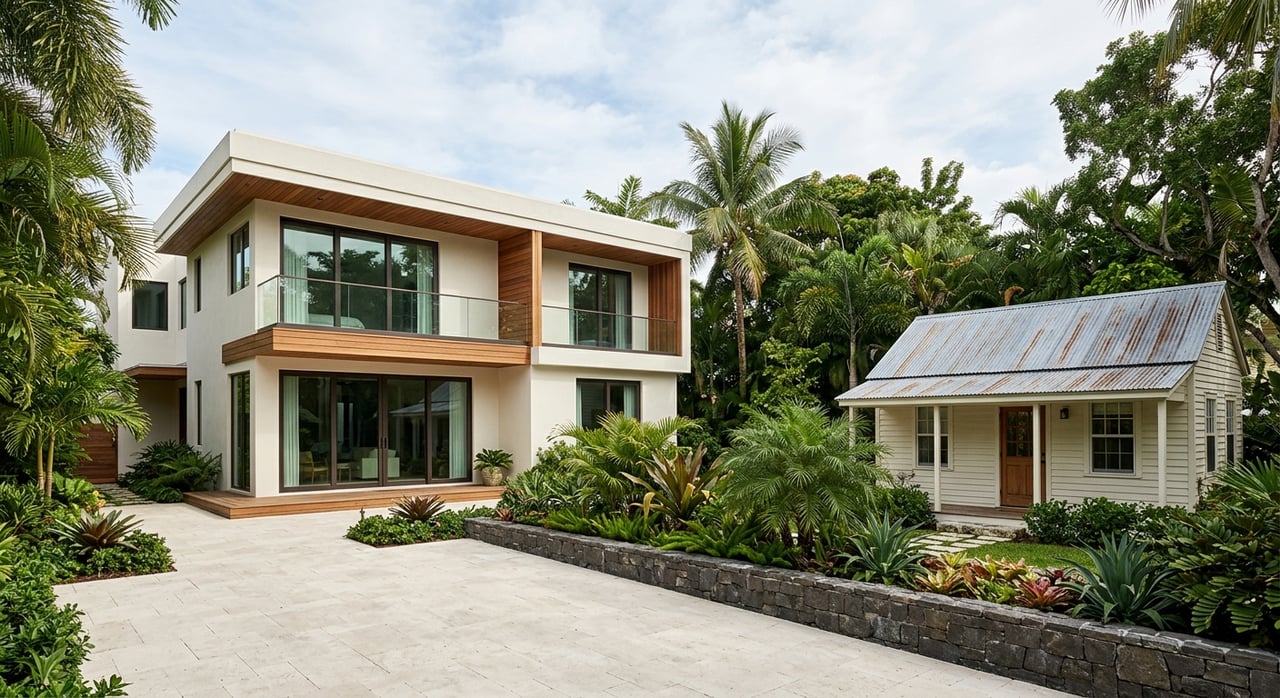
Trying to choose between Kauaʻi’s West Side and South Shore? Even on one island, these areas can feel like very different real estate markets. If you are weighing lifestyle, price, rental rules, or long-term fit, this snapshot will help you compare the two with more confidence. Let’s dive in.
How Kauaʻi frames these areas
Kauaʻi County does not formally label these as “West Side” and “South Shore” planning districts. Instead, the county’s framework separates West Kauaʻi and South Kauaʻi as distinct planning areas.
West Kauaʻi includes the Waimea-Kekaha and Hanapēpē-ʻEleʻele districts. South Kauaʻi covers the Kōloa and Poʻipū side of the island and nearby communities. That planning distinction matters because it shapes land use, housing patterns, and the kind of inventory you are more likely to find in each area.
West Side at a glance
West Kauaʻi’s community plan focuses on infill housing, preserving the historic form and character of rural towns, and improving safe routes for walking and biking. In practical terms, that points to a more town-centered and local-serving development pattern.
For many buyers, that translates into a market that often feels more grounded in everyday residential living. You may see older housing stock, single-family neighborhoods, and opportunities where value and practicality carry more weight than resort-style amenities.
What the West Side often appeals to
If you want a primary residence and a more local, town-scale setting, the West Side can be a strong fit. The county’s planning priorities suggest an area shaped more by community-serving uses than by resort growth.
That does not mean every property is affordable or that every neighborhood is the same. It does mean the West Side is often easier to understand as a value-conscious, primary-home-oriented part of the island.
South Shore at a glance
South Kauaʻi follows a different planning path. The county plan uses special planning areas and form-based code in places like Kōloa Town, the Poʻipū Roundabout, and the Poʻipū Gateway Mixed-Use Village.
The county also ties South Kauaʻi planning to resort land use and visitor-destination areas. That creates a more amenity-driven setting where beach access, mixed-use areas, golf proximity, and walkability can play a larger role in buyer demand.
What the South Shore often appeals to
If you are looking for a second home, resort-area condo, or property with strong lifestyle appeal, the South Shore usually draws more attention. The planning framework supports that pattern, and pricing data reinforces it.
UHERO reported that Kōloa ZIP code 96756 was one of Hawaiʻi’s highest-priced ZIP codes in 2025. The median single-family sale there was $1.8225 million across 84 transactions, and roughly 60% of housing transactions in Kōloa and Princeville went to out-of-state buyers.
Price differences to expect
Countywide, Kauaʻi remained expensive in spring 2026. Hawaiʻi REALTORS reported an April 2026 median sales price of $1.135 million for single-family homes and $875,000 for condos in Kauaʻi County.
Year to date through April 30, 2026, the countywide median was $1.3 million for single-family homes and $800,000 for condos. Closed sales volume was down year over year in both categories, which adds useful context if you are trying to judge leverage, timing, or competition.
South Shore tends to sit higher
The South Shore generally sits at the higher end of the island market. Between the planning structure, visitor-oriented areas, and Kōloa’s pricing profile, this submarket is more consistently associated with premium locations and higher-end inventory.
That can include luxury homes, resort-area condos, and properties that appeal to second-home buyers. If your search priorities include proximity to Poʻipū amenities or visitor-destination areas, you should be prepared for prices that often reflect that demand.
West Side often feels more value-oriented
The West Side more often tracks closer to island medians than the South Shore. Based on county land-use patterns and broader pricing context, it is easier to frame the West Side as a market where primary residence buyers and renovation-minded buyers may find more relative value.
That does not mean “cheap.” On Kauaʻi, even value-oriented markets require careful budgeting and clear expectations. But if you are comparing the two side by side, the West Side often enters the conversation as the more practical price point.
Condos require a closer look
If you are considering a condo on either side of the island, monthly cost matters just as much as purchase price. UHERO’s 2026 Hawaiʻi Housing Factbook noted that statewide condo prices fell 2% in 2025, while higher HOA fees and insurance costs continued to weigh on condo demand.
For you, that means condo shopping should go beyond the listing price. You will want to review association quality, monthly dues, insurance pressures, and overall carrying costs before deciding whether a condo truly fits your budget.
Short-term rental rules can change the answer
For many buyers, the biggest practical divider between these micro-markets is not style or scenery. It is legal use.
Kauaʻi County says short-term rentals of less than 180 days are not permitted outside the Visitor Destination Area, or VDA. The county identifies Poʻipū as one of the island’s three main VDA areas.
Why this matters on the South Shore
If you are exploring a TVR or visitor-oriented strategy, South Shore inventory is usually the more obvious starting point because Poʻipū is within a main VDA area. Even then, you still need to verify approval status, renewal history, and the property’s actual legal use.
The key point is simple: you should never assume a property can be used for short-term rental just because it is marketed that way or located near a resort area. On Kauaʻi, legal status and permit history matter.
Why this matters on the West Side
For West Side buyers, an investment plan may make more sense as a long-term rental or value-add hold rather than a short-term rental play. That is an inference based on the county’s rental rules and the island’s land-use structure.
If your goals are flexible and you are open to renovation or long-term appreciation, the West Side may still offer a compelling path. You just need to evaluate it through the lens of permitted use, condition, and carrying costs.
Coastal due diligence matters on both sides
On Kauaʻi, the planning and permit trail matters almost as much as the view. This is especially true for coastal and near-coastal properties.
The county’s Special Management Area rules and shoreline setback ordinance were updated in 2026 and are currently in effect. For oceanfront or near-ocean homes, that raises the importance of reviewing permit history, shoreline setback status, and what future improvements may or may not be allowed.
South Shore coastal checks
Because the South Shore includes more visitor-oriented coastal inventory, due diligence often needs to go deeper here. If you are looking at an oceanfront home, condo, or lot near the shoreline, review Special Management Area status and setback implications early.
This is not just about current enjoyment. It can affect future additions, repairs, rebuilding options, and long-term resale strategy.
West Side flood and drainage questions
The West Side has its own physical backdrop to evaluate. NOAA and National Weather Service materials note annual rainfall near Kekaha is about 19.70 inches, while also identifying Waimea-Kekaha as a low-lying area vulnerable to flooding and sea-level-rise impacts.
So even though the area is drier than windward Kauaʻi, flood exposure and drainage should still be part of your property review. A dry climate does not automatically mean low risk on an individual lot.
Which side may fit your goals best?
There is no universal winner between the West Side and the South Shore. The better choice depends on what you want the property to do for you.
If your top priorities are value, a more town-centered setting, and a primary-home feel, the West Side often tells the cleaner story. If your priorities lean toward resort amenities, second-home ownership, or VDA-related rental potential, the South Shore usually deserves a closer look.
A simple decision frame
Use this quick lens as you compare options:
- Choose the West Side first if you want a more local-serving setting, a practical price conversation, or renovation upside.
- Choose the South Shore first if you want resort-area convenience, stronger second-home appeal, or inventory tied more closely to visitor-destination areas.
- Pause and verify details if the property is coastal, near the shoreline, or part of a rental-income plan.
What smart buyers compare before deciding
When you narrow your search, compare each area using the same checklist. That helps you avoid getting distracted by views or staging before the fundamentals are clear.
Here are a few of the most important items to line up side by side:
- Purchase price and monthly carrying costs
- Legal use and rental restrictions
- Permit history and improvement flexibility
- Flood exposure, drainage, and coastal constraints
- Property condition and likely near-term repairs
- Whether the home fits your primary, second-home, or investment goals
A calm, property-by-property review usually tells you more than broad market labels. That is especially true on Kauaʻi, where two homes in the same area can carry very different long-term implications.
If you want help comparing West Side and South Shore options with local context, renovation insight, and a clear read on market fit, connect with Kelly Liberatore for grounded guidance tailored to your goals.
FAQs
What is the main difference between West Side and South Shore Kauaʻi real estate?
- The West Side is generally more town-centered and local-serving, while the South Shore is more tied to resort land use, visitor-destination areas, and amenity-driven demand.
Is South Shore Kauaʻi usually more expensive than the West Side?
- Yes. Research in this snapshot shows Kōloa sits at the higher end of the island market, while the West Side more often aligns with a value-oriented or primary-residence conversation.
Can you buy a short-term rental on Kauaʻi’s West Side?
- Kauaʻi County says short-term rentals under 180 days are not permitted outside the Visitor Destination Area, so legal use must be verified carefully before you buy.
Why does Poʻipū matter for South Shore buyers on Kauaʻi?
- Poʻipū is identified by Kauaʻi County as one of the island’s main Visitor Destination Areas, which makes it especially relevant for buyers considering visitor-oriented or TVR-capable property.
What should you check before buying a coastal property on Kauaʻi?
- Review shoreline setback status, Special Management Area considerations, flood exposure, permit history, and whether the property’s current use matches its legal status.